



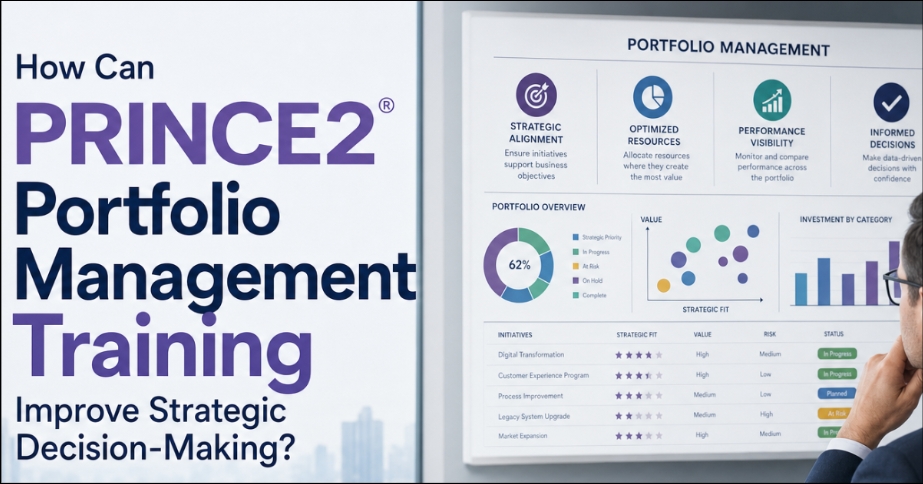
Strategic decisions influence how organisations use money, people, technology, and time. When several projects compete for limited resources, leaders need a structured way to decide which initiatives deserve priority. PRINCE2 Portfolio Management Training helps professionals develop a broader view of projects, programmes, investments, risks, and expected benefits. Instead of focusing only on individual project delivery, portfolio management connects different initiatives with business objectives. This approach can help organisations make better investment decisions, respond to changing priorities, and maintain a portfolio that supports long-term strategic goals.
How Does PRINCE2 Portfolio Management Training Connect Projects With Business Strategy?
A project can be completed successfully without delivering meaningful strategic value. For example, an initiative may meet its deadline and budget but no longer support current business priorities. PRINCE2 Portfolio Management Training helps professionals look beyond individual project performance and consider how investments collectively support organisational objectives. This broader perspective allows decision-makers to assess strategic contribution, expected benefits, available resources, and changing business needs before committing further investment.
Connecting Investments With Business Objectives
Every investment should have a clear business purpose. Organisations may want to increase revenue, improve customer experience, reduce costs, modernise technology, or enter new markets. Portfolio management helps leaders examine whether proposed initiatives support these objectives. Rather than approving projects simply because they appear attractive, decision-makers can consider strategic value, benefits, risks, costs, and resource requirements. This creates a clearer connection between business strategy and the investments selected to deliver organisational change.
Moving From Project to Portfolio Thinking
Project management generally focuses on delivering a defined initiative successfully. Portfolio management takes a wider view by considering how multiple projects and programmes contribute to strategic objectives. This can help leaders identify competing priorities, duplicated investments, resource conflicts, and initiatives that may no longer provide sufficient value. A portfolio perspective therefore makes strategic discussions more effective because decision-makers can evaluate the overall investment landscape instead of judging every project separately.
How Can Portfolio Management Training Improve Investment and Project Prioritisation?
Organisations often have more potential projects than they can fund or deliver simultaneously. Without structured prioritisation, decisions may be influenced by urgency, internal pressure, or personal preferences. A MoP Course can help professionals understand how initiatives can be evaluated against strategic objectives, benefits, risks, costs, and available resources. This provides a consistent basis for deciding which projects should receive investment, which should be delayed, and which may no longer deserve organisational attention.
Comparing Projects More Objectively
Different projects can provide different forms of value. One may generate revenue, while another may reduce operational risk or satisfy an important regulatory requirement. Portfolio management allows these factors to be considered together. Decision-makers can compare strategic contribution, expected benefits, risk exposure, resource requirements, dependencies, and timing. This creates a balanced approach to investment decisions and helps organisations build a portfolio that reflects wider business priorities instead of focusing on one measurement alone.
Balancing Short-Term and Long-Term Priorities
Strategic planning requires organisations to balance immediate needs with future opportunities. A business may need to improve current operations while investing in innovation, digital transformation, or market expansion. Portfolio management helps leaders consider how different investments contribute to short-term and long-term goals. This can prevent urgent projects from consuming all available resources while maintaining investment in initiatives that may deliver greater strategic value over time.
Managing Limited Resources
People, funding, technology, and organisational capacity can limit how many initiatives a business can pursue. Approving too many projects can spread resources too thinly and reduce delivery performance. Portfolio management helps leaders consider resource requirements across the entire portfolio. They can identify conflicts, assess organisational capacity, and decide where resources are likely to create the greatest value. This turns resource allocation into a strategic activity rather than simply an operational task.
How Does PRINCE2 Portfolio Management Training Help Leaders Manage Risk and Change?
Strategic decisions are rarely made in completely stable conditions. Market changes, budget restrictions, technology developments, regulations, and organisational changes can affect several projects simultaneously. MoP Training helps professionals understand risk from a portfolio perspective instead of considering every initiative independently. This broader approach allows leaders to identify common risks, dependencies, and areas of exposure. When circumstances change, they can review portfolio priorities and determine whether investments, resources, or expected outcomes require adjustment.
Understanding Risks Across Projects
Looking at risks individually can hide wider portfolio problems. Several projects may depend on the same supplier, technology, specialist employees, or funding source. A problem affecting one area could therefore influence multiple initiatives. Portfolio-level risk management helps leaders identify these connections and understand their potential impact. This allows decision-makers to consider whether risks should be reduced, accepted, transferred, or addressed through changes to portfolio priorities.
Responding to Changing Business Conditions
Business conditions can change quickly. A new competitor, regulation, technology, customer requirement, or financial challenge may alter the value of an existing initiative. Portfolio management provides a structured basis for reviewing whether projects still support organisational objectives. Leaders can compare current conditions with the original investment rationale and decide whether an initiative should continue, change direction, pause, or stop. This prevents organisations from continuing investments simply because they were previously approved.
Strengthening Strategic Governance
Effective portfolio management also depends on clear governance. Leaders need to know who can approve investments, change priorities, allocate resources, and intervene when performance becomes a concern. Clear governance structures improve accountability and create a stronger connection between senior leadership and portfolio delivery. MoP Training can help professionals understand how governance supports consistent decisions and keeps portfolio investments connected with organisational strategy.
Managing Dependencies and Conflicting Priorities
Projects rarely operate completely independently. One initiative may depend on another project’s technology, resources, information, or deliverables. Portfolio management helps leaders identify these relationships before they create serious problems. It also highlights situations where projects compete for the same resources or support conflicting objectives. Understanding these dependencies allows decision-makers to adjust schedules, priorities, or investment levels while maintaining focus on the organisation’s most important strategic outcomes.
How Can MoP Course Knowledge Support Better Strategic Decisions?
Strategic decisions require organisations to regularly review benefits, risks, resources, performance, and changing priorities. A MoP Course helps professionals understand how portfolio information can support better investment decisions. By considering strategic alignment, benefits, governance, risk, and resources together, leaders can make informed choices as business needs change.
Focusing on Business Benefits
Completing a project does not guarantee that it will deliver the expected value. Portfolio management encourages leaders to monitor whether planned benefits, such as higher revenue, lower costs, or improved efficiency, remain achievable. This keeps decision-making focused on business outcomes rather than project activity alone.
Allocating Resources Effectively
Organisations often have limited funding, skilled employees, technology, and management capacity. Portfolio management helps leaders compare resource requirements across initiatives and prioritise investments that offer greater strategic value. This supports realistic planning and prevents important resources from being spread too thinly.
Supporting Better Portfolio Reviews
Regular reviews help decision-makers assess progress, risks, benefits, resources, and changing priorities. Professionals can develop these skills through PRINCE2 Portfolio Management Training. Tecknologia provides training designed to build practical portfolio management knowledge. Professionals searching for MoP Training or a MoP Course may also encounter the current PRINCE2 Portfolio Management terminology, making it useful to understand this transition when exploring professional development options.
Conclusion
Strategic decision-making becomes stronger when leaders understand how individual projects contribute to wider organisational goals. PRINCE2 Portfolio Management Training provides a structured approach to strategic alignment, prioritisation, benefits, risk, governance, and resource management. These capabilities help professionals evaluate investments and respond when business priorities change. For professionals familiar with previous terminology, a MoP Course or MoP Training connects with the current PRINCE2 Portfolio Management pathway. By applying portfolio management principles consistently, organisations can make informed investment decisions and maintain a portfolio that supports long-term strategic objectives.