



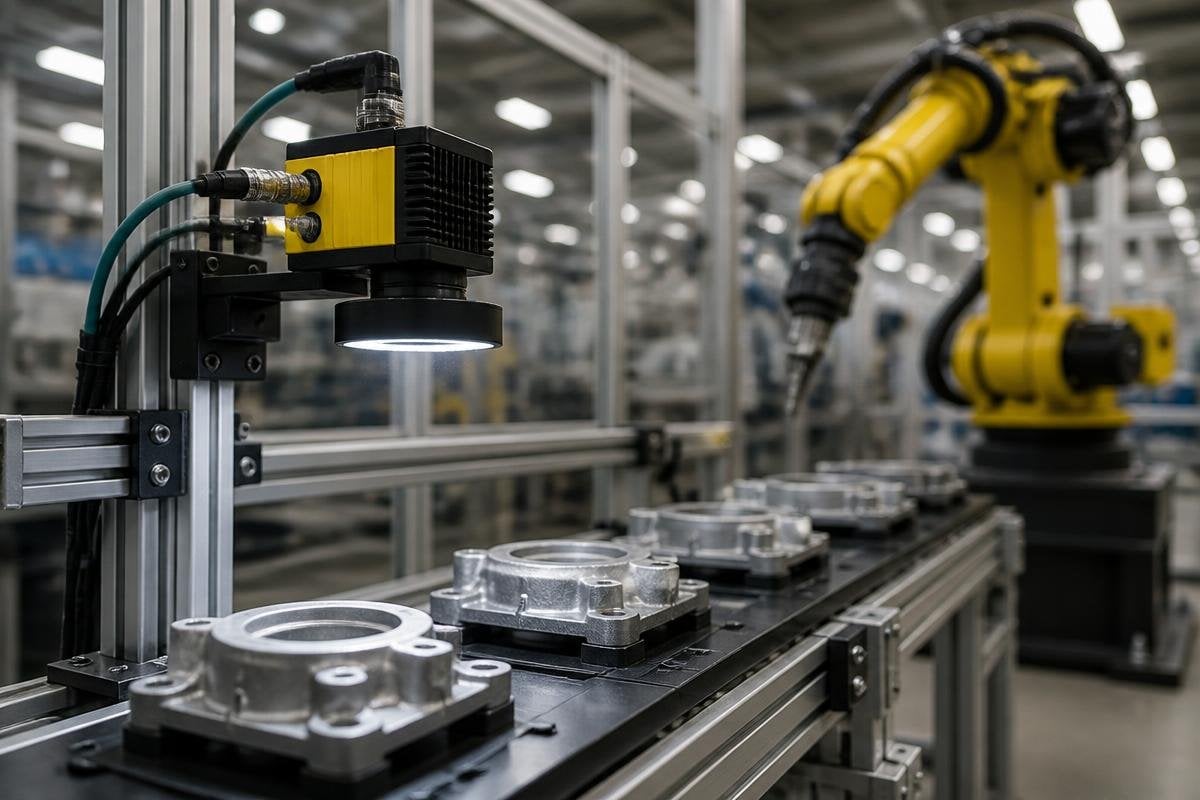
A factory camera can check a part before a robot touches it. It can also read a barcode, measure an edge, or spot a missing screw while the line keeps running. That shift is making machine vision a working part of automation, rather than a camera mounted beside it.
- 2D vision checks shape, color, text, and position on a flat image
- 3D vision adds depth for height checks, bins, and uneven parts
- Lighting and camera placement often matter as much as the software
What machine vision does on the line
The process starts with an image. A camera records pixels, and software looks for a known pattern inside them. The result may be a pass or fail signal, a measurement, or a position sent to a robot controller.
That signal gives the next machine something useful to do. A robot can pick a part only after vision finds its location. A conveyor can send a faulty item to a reject bin after the camera spots a scratch or missing feature. The camera becomes part of the control loop.
The job changes with the camera type. A 2D system reads height and width on an image with horizontal and vertical positions. A 3D system adds depth, which helps when parts overlap or sit at different heights in a bin.
A barcode reader is another form of machine vision. It turns printed marks into data, so the factory can link a part to a work order or send it to the right station. That matters when several versions of a product share the same line.
Why lighting and setup decide the result
Software can’t fix every bad image. Reflections from metal, shadows inside a hole, and changing light can hide the feature the camera needs to see. A fixed light source gives the software a more consistent image from one cycle to the next.
Lens choice matters too. A standard lens can make parts look different as their distance from the camera changes. A telecentric lens reduces that effect when the system needs accurate edge measurements, though it adds cost and needs careful setup.
The trigger must also match the machine. An encoder can tell the camera when an item reaches a set position, while a sensor can start the image when a part breaks a light beam. If the image arrives after the part has moved, the robot may receive the wrong coordinates.
For a plant manager, the useful question is not whether a camera can see the part. It is whether the full setup can make the right decision at the required speed, under the light and dirt found on the line.
Where the limits show up
Machine vision works best when the part, light, and camera stay within a known range.
A new finish, a changed label, or a small shift in position can raise false rejects. The system then needs new sample images and a check of its thresholds.
3D vision adds information, but it also adds work. Depth data can contain gaps around dark or shiny surfaces, and the software still needs a rule for what counts as a pass. More data doesn’t remove the need for a clear inspection plan.
A camera can spot a defect only when the part reaches the right position and the robot presents it the same way each time. Robot24.com reports on the cameras, robots, and factory tasks behind these systems, keeping the question tied to the inspection line rather than the camera alone.
I’d spend more time on lighting and part handling than on the camera brand. A well-placed light can fix an inspection that a more costly camera cannot.
A practical buying checklist
Use these questions before choosing hardware or software:
- Name the decision: define the exact pass, fail, measurement, or robot position the system must produce
- Check the part: list changes in color, finish, shape, labels, and orientation
- Choose the view: use 2D for flat features and 3D when depth or height changes the task
- Plan the trigger: set the image timing from a sensor, encoder, or fixed machine position
- Test the bad cases: include dirt, glare, missing parts, shifted parts, and acceptable variation
- Set the response: decide what the line does after a failed check and who reviews false rejects
That last step keeps vision tied to production. A camera that finds faults but gives no clear action becomes another screen for someone to watch.
Machine vision is becoming useful because it gives automation information at the point where work happens. The next decision is practical: which part, defect, or position should the factory measure first, and what action will follow each image?