




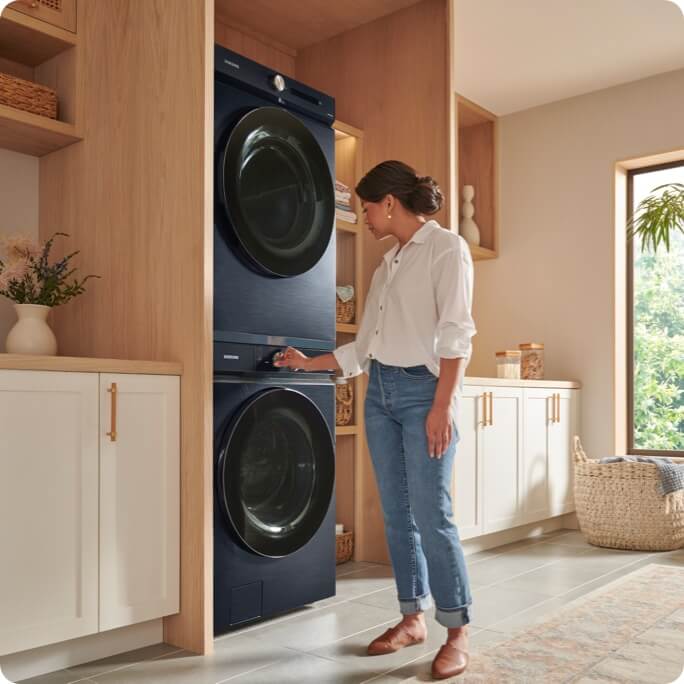
Buying your first washing machine can feel surprisingly complicated. Modern models come with different capacities, loading styles, wash programs, motor technologies, and smart features, making it difficult to know which options actually matter. The good news is that you do not need to understand every technical specification to make a sensible purchase.
A washing machine should primarily match your household size, laundry habits, available space, budget, and preferred level of convenience. Once these basics are clear, comparing models becomes much easier.
Understand the Main Types of Washing Machines
The first decision is choosing between a semi-automatic and fully automatic machine. Semi-automatic models generally require more manual involvement, such as moving clothes between washing and spinning sections. They can be useful for buyers who want a simpler or lower-cost appliance.
Fully automatic machines handle washing, rinsing, and spinning within the same appliance. They are generally more convenient for people who want to place the clothes inside, select a program, and let the machine complete the cycle.
Fully automatic machines are commonly divided into two major designs: top-load and front-load.
Top-Load Washing Machines Explained
Top-load machines have an opening on the upper surface, allowing clothes to be placed into the drum from above. This design can be convenient for people who prefer easier loading and unloading without bending as much.
Some top-load machines use a central agitator, while others use an impeller that creates water movement to clean clothes. Their wash cycles are often relatively straightforward, and selected models allow additional clothing to be added after a cycle has started.
Top-load machines can be a practical choice for households that prioritize convenience, familiar operation, and potentially lower initial costs.
Front-Load Washing Machines Explained
Front-load machines have a door on the front and clean clothes through a tumbling action. They are often recognized for efficient water use, strong spinning performance, and gentle treatment of many fabrics.
One important consideration is that front-load cycles can take longer than some top-load programs. The door also needs enough clearance to open fully, so buyers should measure the installation area before purchasing.
Front-load models can be particularly attractive to households that wash frequently and want to focus on water efficiency and fabric care.
Choosing the Right Capacity
Capacity is one of the most important specifications because it determines how much dry laundry the machine can handle in a cycle. Buying a machine that is too small may force you to run multiple loads, while an unnecessarily large machine can take up additional space and cost more.
As a general starting point, a smaller household may find around 6–7 kg sufficient, while households with several members may prefer approximately 8–10 kg. Larger families or people who regularly wash bulky bedding may benefit from 10 kg or more.
Think about your largest regular laundry loads rather than only your everyday clothing. Bedsheets, towels, blankets, and winter clothing can require substantially more space.
Check the Available Space Before Buying
Never choose a washing machine based only on its advertised capacity. Measure the space where it will be installed, including width, height, and depth.
Remember to leave enough room for hoses, electrical connections, ventilation where required, and opening the lid or door. For front-load machines, the door needs sufficient space to swing outward.
Also consider how the machine will reach its final location. A model that fits perfectly in the laundry area may still be difficult to move through a narrow doorway or staircase.
Consider Water and Electricity Efficiency
A washing machine is used regularly, so operating efficiency can affect household expenses over time. Look for models with efficient wash programs, load-sensing technology, and appropriate energy ratings.
Some modern machines can detect the size of a load and adjust water usage accordingly. Washing with cooler temperatures can also reduce energy consumption because heating water generally requires a significant amount of electricity.
For first-time buyers, efficiency should be considered alongside the purchase price rather than treated as an optional extra.
Decide Which Features You Actually Need
Modern washing machines may offer dozens of programs and functions, but more features do not automatically mean a better purchase.
Useful programs can include cotton, delicate, quick wash, heavy-duty, bedding, and rinse-and-spin cycles. Depending on your household, features such as child locks, delay start, load sensors, adjustable spin speeds, and automatic detergent systems may also be valuable.
Smartphone connectivity and app controls can be convenient, but they should not be the main reason for choosing a particular machine unless you genuinely expect to use them.
For example, a Vision Washing Machine may be considered alongside other models by comparing its capacity, wash programs, motor technology, energy efficiency, warranty, and suitability for your particular laundry needs rather than focusing only on its brand name.
Pay Attention to the Motor
The motor is one of the key working components of a washing machine. Some modern appliances use inverter motor technology, which can adjust motor operation according to the load and selected cycle.
Potential advantages include quieter operation and improved efficiency, although actual performance depends on the complete design of the machine.
When comparing models, check the motor warranty as well as the overall appliance warranty. A longer motor warranty can provide additional reassurance, but buyers should still examine the terms and conditions.
Think About Maintenance
A washing machine does not become maintenance-free simply because it is automatic. Regular care can help keep the appliance performing properly.
Leave the door or lid open after washing when appropriate so excess moisture can escape. Clean detergent compartments and inspect the door seal on front-load machines. Periodically run the manufacturer’s recommended cleaning cycle to remove detergent residue and buildup.
It is also important not to overload the drum. Clothes need enough room to move during the wash cycle, and excessive loading can affect cleaning performance and place unnecessary strain on components.
Check Installation Requirements
Before purchasing, find out what the machine requires for installation. Water supply connections, drainage arrangements, electrical requirements, and a stable floor are all important.
The machine should sit level and securely. An uneven appliance can vibrate excessively during high-speed spinning, producing unnecessary noise and potentially affecting performance.
If professional installation is available, using the manufacturer’s recommended service can be worthwhile, particularly for first-time buyers.
Compare Warranty and After-Sales Support
Price should not be the only factor in your decision. A washing machine is a long-term household appliance, so access to spare parts, authorized service centers, and warranty support can be just as important.
Before buying, understand what the warranty covers, how long different components are protected, and whether installation or service charges are included. A slightly more expensive machine with dependable support may provide better long-term value than a cheaper model with limited assistance.
Avoid Paying for Features You Will Not Use
It is easy to become distracted by touchscreen controls, Wi-Fi connectivity, artificial intelligence, dozens of wash programs, and other modern additions. These technologies can be useful, but they are not essential for every household.
Instead, prioritize the fundamentals: appropriate capacity, reliable construction, suitable wash performance, efficient operation, easy controls, and dependable service.
A simple machine that matches your laundry habits can be a better purchase than an expensive model filled with functions that rarely get used.
A Simple Checklist for First-Time Buyers
Before making your final decision, consider these questions:
- How many people regularly use the machine?
- How much laundry do you normally wash each week?
- Do you frequently wash blankets, towels, or bedding?
- Would a top-load or front-load design be more convenient?
- Is the machine’s capacity appropriate for your largest loads?
- Does it fit the available installation space?
- How much water and electricity does it use?
- Which wash programs will you actually need?
- Does it have a reliable motor and suitable warranty?
- Is after-sales service available in your area?
- Can you comfortably afford both the purchase price and long-term operating costs?
Final Thoughts
Choosing your first washing machine does not have to be overwhelming. Start with the practical basics: determine your required capacity, measure your available space, decide between top-load and front-load operation, and consider water and electricity efficiency. Then evaluate useful features, maintenance requirements, warranty coverage, and after-sales support.
The best washing machine is not necessarily the largest, most expensive, or most technologically advanced model. It is the one that fits your household’s laundry routine and provides convenient, dependable performance for years to come.
