




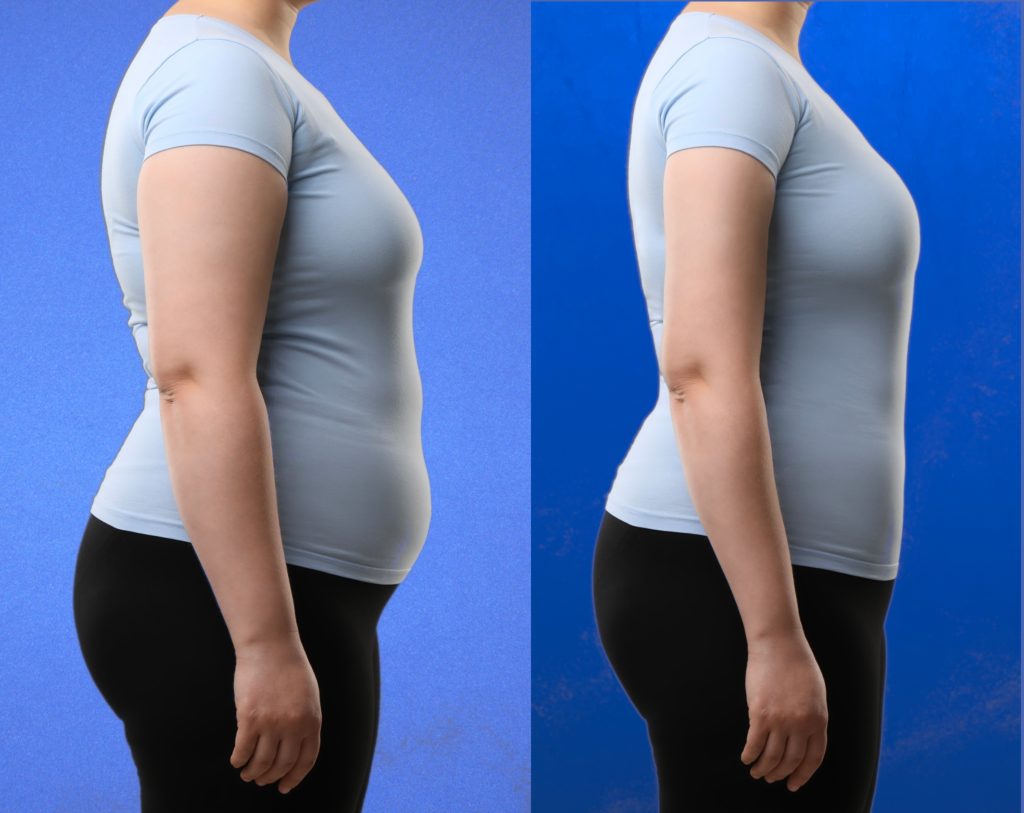
Smart Lipo is a minimally invasive form of laser-assisted liposuction designed to target localized pockets of unwanted fat and improve body contours. Unlike a weight-loss procedure, its primary purpose is body sculpting. The amount of fat removed during one treatment depends on the patient’s anatomy, the treatment areas, overall health, and the surgeon’s assessment.
There is no single amount that is appropriate for every patient. A smaller treatment area may require only a modest amount of fat removal, while treating several areas may involve a larger volume. The goal is generally to achieve noticeable contour improvement while maintaining patient safety.
Is There a Standard Maximum Amount?
When discussing liposuction volume, it is important to distinguish fat from total aspirate. The material removed during liposuction can contain fat, fluid, blood, and other components. Therefore, a stated volume of five liters does not necessarily mean that five liters of pure fat have been removed. The American Society of Plastic Surgeons has described 5,000 mL of total lipoaspirate as the threshold commonly used to define large-volume liposuction, while emphasizing that safety depends on individual circumstances.
Some clinical guidelines similarly recommend that total aspirate generally not exceed 5,000 mL during a single operative session. Larger procedures can carry additional risks and require careful patient selection, monitoring, and fluid management.
Why the Amount Varies From Patient to Patient
A surgeon does not determine the treatment volume simply by choosing a target number. Several factors influence how much can reasonably be removed.
Body Size and Fat Distribution
Patients with localized fat deposits may need relatively small amounts removed to create a visible improvement. The amount of available subcutaneous fat and its distribution across the abdomen, flanks, thighs, arms, or other areas can influence the treatment plan.
Skin Elasticity
Removing fat does not automatically tighten loose skin. Patients with good skin elasticity may experience smoother contouring after fat removal, while significant skin laxity may require a different or additional approach.
Number of Areas Treated
Treating one small area is very different from treating several larger areas during the same procedure. As the number and size of treatment areas increase, the total aspirate and operating time can also increase.
Overall Health
Medical history, medications, body weight, anesthesia considerations, and other health factors all contribute to determining whether a particular volume is appropriate. Research has also found that complication risk is influenced by factors such as liposuction volume and BMI rather than by volume alone.
Smart Lipo Is Not a Weight-Loss Procedure
One of the most important points for prospective patients is that Smart Lipo should not be viewed as a substitute for weight management. Liposuction is primarily intended to reshape specific areas of the body rather than produce substantial overall weight loss.
For example, someone may have a healthy or relatively stable body weight but still have stubborn abdominal or flank fat that does not respond easily to diet and exercise. In such situations, targeted fat removal may be considered for contour refinement.
What Does a Typical Treatment Involve?
During a consultation, the surgeon evaluates the areas the patient wants to improve and determines whether laser-assisted liposuction is appropriate. The treatment plan may focus on one area or several carefully selected areas.
The laser component can assist with fat disruption and may also promote some degree of tissue contraction. However, the amount of fat that can be removed is still governed by surgical safety considerations rather than by the technology alone.
For someone researching smart lipo The Woodlands, the most useful approach is to discuss the desired treatment areas, expected contour changes, estimated aspirate volume, anesthesia plan, and recovery requirements directly with a qualified medical professional.
Why Removing More Fat Is Not Always Better
It may seem logical that removing a larger amount of fat should produce a better result, but aggressive fat removal can create problems. Excessive removal may increase the risk of fluid-related issues, blood loss, contour irregularities, and other complications. Studies of large-volume liposuction have found higher complication rates as treatment volume increases, reinforcing the importance of individualized planning.
A skilled surgeon therefore focuses on proportion and contour, rather than simply maximizing the amount removed. The objective is to create a natural-looking transition between treated and untreated areas.
What Happens If More Fat Needs to Be Removed?
If a patient has extensive areas of unwanted fat, performing everything in one session may not always be the best option. Depending on the patient’s circumstances, a surgeon may recommend limiting the amount treated during one procedure and considering additional treatment later.
Spacing procedures can allow the body to recover before another intervention is considered. The appropriate timing and treatment strategy should be determined individually by the treating surgeon.
Setting Realistic Expectations
The final result is influenced by more than the amount of fat removed. Skin quality, tissue structure, body proportions, healing, postoperative swelling, and the patient’s ability to maintain a stable weight can all affect the appearance of the result.
Patients should also remember that early postoperative swelling can make the treated area appear larger or uneven before the final contour becomes apparent. Results generally develop progressively as swelling subsides and the tissues heal.
The Bottom Line
There is no universal amount of fat that every Smart Lipo patient can safely have removed in one session. The amount depends on the treatment area, the patient’s body composition and health, the technique being used, and the surgeon’s safety assessment. A commonly referenced benchmark for liposuction is 5 liters of total aspirate, not necessarily 5 liters of pure fat.
The safest treatment plan is therefore not necessarily the one that removes the most fat. It is the one that achieves the desired contour improvement while keeping the procedure appropriately tailored to the individual patient.
